Top sleep hygiene tips for reducing insomnia and falling asleep faster are essential for achieving restful nights and waking up refreshed. Insomnia, the persistent inability to fall or stay asleep, can significantly impact your well-being, affecting your mood, energy levels, and overall health.
Fortunately, adopting healthy sleep habits can make a world of difference in improving your sleep quality and reducing insomnia.
This guide will delve into the science behind sleep hygiene, exploring practical strategies to improve your sleep habits. We will cover everything from establishing a relaxing bedtime routine and optimizing your sleep environment to managing stress and anxiety, making dietary adjustments, and understanding the role of exercise and light exposure.
By implementing these tips, you can take control of your sleep, experience the transformative benefits of restful nights, and awaken feeling revitalized and ready to embrace the day.
Understanding Insomnia and Sleep Hygiene
Insomnia is a common sleep disorder characterized by difficulty falling asleep, staying asleep, or both. It can significantly impact your physical and mental well-being. Understanding the difference between occasional sleeplessness and chronic insomnia, as well as the various types of insomnia and their potential causes, is crucial for effective treatment and management.
Additionally, practicing good sleep hygiene is essential for promoting healthy sleep patterns and reducing insomnia symptoms.
Types of Insomnia
Insomnia can be categorized into different types based on its duration and underlying causes:
- Acute Insomnia: This type of insomnia is short-term and lasts for a few days or weeks. It is often triggered by stressful life events, such as a new job, a death in the family, or a major life change.
- Chronic Insomnia: This type of insomnia persists for at least three nights a week for at least three months. Chronic insomnia can be caused by various factors, including underlying medical conditions, mental health disorders, and lifestyle habits.
Causes of Insomnia
The causes of insomnia can vary widely, but some common factors include:
- Stress and Anxiety: Stress and anxiety can make it difficult to relax and fall asleep.
- Depression: Depression is often associated with sleep disturbances, including insomnia.
- Medical Conditions: Certain medical conditions, such as chronic pain, asthma, and thyroid disorders, can disrupt sleep.
- Medications: Some medications, such as stimulants and antidepressants, can interfere with sleep.
- Lifestyle Habits: Poor sleep hygiene, such as irregular sleep schedules, excessive caffeine or alcohol consumption, and exposure to blue light from electronic devices before bed, can contribute to insomnia.
Principles of Sleep Hygiene
Sleep hygiene refers to a set of practices and habits that promote healthy sleep patterns. Here are some key principles of sleep hygiene:
- Establish a Regular Sleep Schedule: Go to bed and wake up at the same time every day, even on weekends, to regulate your body’s natural sleep-wake cycle.
- Create a Relaxing Bedtime Routine: Engage in calming activities before bed, such as taking a warm bath, reading a book, or listening to soothing music. Avoid watching TV or using electronic devices.
- Optimize Your Sleep Environment: Make sure your bedroom is dark, quiet, and cool. Use blackout curtains, earplugs, or a white noise machine to minimize distractions.
- Limit Caffeine and Alcohol Consumption: Avoid caffeine and alcohol several hours before bedtime. Caffeine is a stimulant that can interfere with sleep, and alcohol can disrupt sleep cycles.
- Avoid Large Meals Before Bed: Eating a heavy meal close to bedtime can make it difficult to fall asleep.
- Get Regular Exercise: Regular physical activity can improve sleep quality, but avoid exercising too close to bedtime.
- Limit Daytime Naps: Short naps can be beneficial, but avoid long or late-afternoon naps.
- See a Doctor If You Have Persistent Sleep Problems: If you have persistent insomnia, consult a healthcare professional to rule out any underlying medical conditions and discuss treatment options.
Creating a Relaxing Bedtime Routine
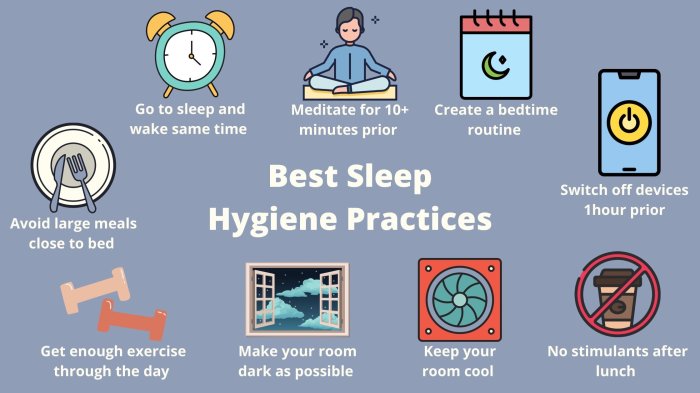
A consistent bedtime routine signals to your body that it’s time to wind down and prepare for sleep. This routine should be calming and relaxing, helping you transition from your day to a peaceful night’s rest.
Designing a Relaxing Bedtime Routine
Creating a relaxing bedtime routine involves a series of steps that help you unwind and prepare your body for sleep.
- Set a Regular Sleep Schedule:Go to bed and wake up at the same time each day, even on weekends, to regulate your body’s natural sleep-wake cycle.
- Dim the Lights:As the evening progresses, gradually dim the lights in your home to signal to your brain that it’s time to relax. This helps to reduce the production of cortisol, a stress hormone, and increase melatonin, a sleep-regulating hormone.
- Avoid Screens:The blue light emitted from electronic devices like smartphones, tablets, and computers can interfere with melatonin production and make it harder to fall asleep. Try to avoid screen time at least an hour before bed.
- Engage in Relaxing Activities:Incorporate activities that promote relaxation into your routine, such as taking a warm bath, reading a book, listening to calming music, or practicing gentle stretches.
- Have a Light Snack:A light snack before bed can help regulate blood sugar levels and prevent nighttime hunger pangs. Avoid sugary or heavy foods that can interfere with sleep.
Creating a Calming Sleep Environment
A comfortable and relaxing sleep environment is crucial for promoting sleep.
- Optimize Room Temperature:The ideal temperature for sleep is around 65 degrees Fahrenheit (18 degrees Celsius). A cooler room helps to regulate body temperature and promote sleep.
- Minimize Light:Darkness is essential for melatonin production and sleep. Use blackout curtains or an eye mask to block out any light sources.
- Control Noise:A quiet sleep environment is essential for peaceful sleep. Use earplugs or a white noise machine to minimize distracting noises.
Incorporating Relaxation Techniques
Relaxation techniques can help calm your mind and body, making it easier to fall asleep.
- Deep Breathing Exercises:Slow, deep breaths can help to reduce stress and promote relaxation. Practice techniques like diaphragmatic breathing or box breathing.
- Meditation:Mindfulness meditation involves focusing on the present moment without judgment. This can help to quiet your mind and reduce racing thoughts.
- Progressive Muscle Relaxation:This technique involves tensing and releasing different muscle groups throughout the body, promoting relaxation and reducing tension.
Optimizing Your Sleep Environment
Your bedroom is your sanctuary for sleep, and creating the right environment can significantly impact your sleep quality. Imagine a serene, peaceful space that welcomes you to unwind and drift off to sleep. Let’s explore how you can optimize your sleep environment to maximize your chances of getting a restful night’s sleep.
Ideal Temperature
The ideal temperature for sleep is between 60 and 67 degrees Fahrenheit (15.5 to 19.4 degrees Celsius). A slightly cool environment helps regulate your body temperature, which is crucial for falling asleep and staying asleep. When your body temperature drops, it signals to your brain that it’s time to rest.
Lighting
Darkness is a powerful sleep cue. Your body produces melatonin, a hormone that regulates your sleep-wake cycle, in response to darkness. Exposure to light, especially blue light emitted from electronic devices, can suppress melatonin production and make it harder to fall asleep.
Here are some tips for creating a dark sleep environment:
- Use blackout curtains or shadesto block out all light from windows.
- Avoid using electronic devicesfor at least an hour before bedtime. The blue light emitted from these devices can interfere with melatonin production.
- Keep your bedroom as dark as possibleduring the night. If you need a nightlight, choose one that emits a soft, warm light.
Noise Levels
Quiet is essential for restful sleep. Even subtle noises, like traffic or a dripping faucet, can disrupt your sleep cycle. Here are some tips for creating a quiet sleep environment:
- Use earplugsto block out external noise. There are many different types of earplugs available, so you can find ones that are comfortable and effective for you.
- Use a white noise machineto create a soothing background noise that can help mask other sounds.
- Consider using a fanto create a gentle, white noise that can help block out other sounds.
Mattress and Pillows, Top sleep hygiene tips for reducing insomnia and falling asleep faster
A comfortable and supportive mattress and pillows are essential for a good night’s sleep. Your mattress should provide adequate support for your spine and help maintain a neutral spine alignment. Pillows should be supportive and comfortable, allowing you to maintain a neutral head and neck alignment.
- Consider the type of mattressthat best suits your sleep style and preferences. There are many different types of mattresses available, including memory foam, innerspring, latex, and hybrid mattresses. You can try out different mattresses in a store or order one online with a trial period.
- Choose pillows that support your head and neck. If you sleep on your side, you’ll need a pillow that’s thick enough to fill the space between your head and shoulder. If you sleep on your back, you’ll need a pillow that supports your neck without being too high.
If you sleep on your stomach, you may not need a pillow at all, or you can use a very thin pillow.
Dietary Habits and Sleep
What you eat and drink can significantly impact your sleep quality. Just as a healthy diet can boost your overall well-being, it can also contribute to a more restful night’s sleep.
The Impact of Food and Drink on Sleep
Your dietary choices can influence your sleep in several ways. Some foods and drinks can make it harder to fall asleep or stay asleep, while others can promote relaxation and improve sleep quality. For example, a heavy meal right before bed can disrupt sleep, while a light snack can help regulate blood sugar levels and improve sleep.
Regular Exercise and Sleep: Top Sleep Hygiene Tips For Reducing Insomnia And Falling Asleep Faster
Regular physical activity can significantly enhance your sleep quality, making it easier to fall asleep and stay asleep throughout the night. It is a powerful tool for improving sleep, especially when combined with other good sleep hygiene practices.
Benefits of Exercise for Sleep
Exercise can improve sleep quality in several ways. Regular physical activity helps regulate your body’s natural sleep-wake cycle, known as the circadian rhythm. It also helps reduce stress and anxiety, which are common contributors to insomnia. Exercise can even improve your sleep quality by increasing your body’s core temperature.
Exercise Timing and Intensity for Optimal Sleep
The timing and intensity of your exercise routine can influence its impact on sleep. It is generally recommended to avoid strenuous exercise close to bedtime, as it can make it harder to fall asleep.
- Aim for at least 30 minutes of moderate-intensity exercise most days of the week. Moderate-intensity exercise is defined as an activity that raises your heart rate and makes you breathe harder, but you can still hold a conversation.
- If you prefer more vigorous exercise, aim for at least 20 minutes of vigorous-intensity exercise most days of the week. Vigorous-intensity exercise is defined as an activity that makes you breathe very hard and makes it difficult to hold a conversation.
- Try to finish your workout at least 3 hours before bedtime. This allows your body time to cool down and relax before you go to sleep.
How Exercise Improves Sleep Quality
Exercise can improve sleep quality by reducing stress and promoting relaxation. When you exercise, your body releases endorphins, which have mood-boosting effects. Exercise can also help you manage stress by providing an outlet for pent-up energy and tension.
Closing Summary
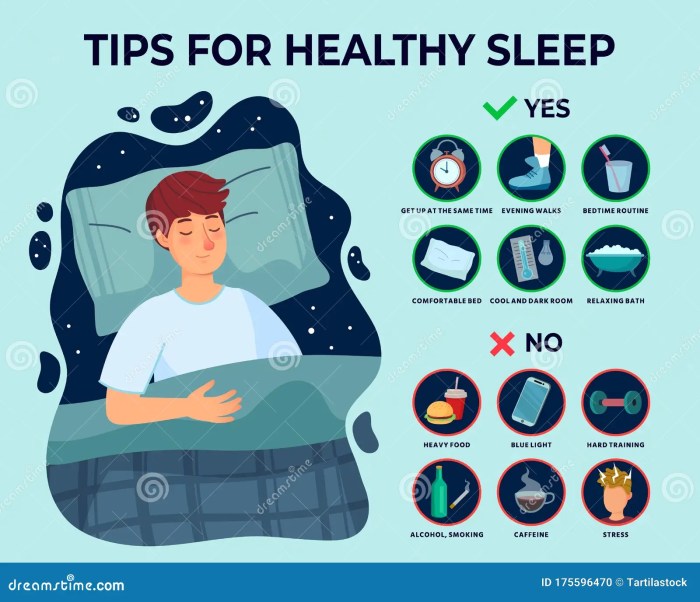
Achieving restful sleep is a journey, not a destination. By incorporating these sleep hygiene tips into your daily routine, you can pave the way for consistent, quality sleep. Remember, consistency is key, so stick with your new sleep habits and be patient as you witness positive changes in your sleep patterns.
If you continue to experience persistent insomnia, don’t hesitate to seek professional help from a sleep specialist. They can provide personalized guidance and address any underlying sleep disorders.
Essential Questionnaire
What is the difference between occasional sleeplessness and chronic insomnia?
Occasional sleeplessness refers to short-term difficulty sleeping that occurs infrequently, often due to stress or temporary life changes. Chronic insomnia, on the other hand, is a persistent sleep problem that lasts for at least three months and significantly affects daily functioning.
How long does it take for sleep hygiene changes to show results?
It may take a few weeks or even months to see significant improvements in your sleep patterns after implementing sleep hygiene changes. Consistency is key, so stick with your new habits and be patient. If you don’t see any improvement after a few weeks, consult with a sleep specialist.
Are there any natural remedies for insomnia?
While there are no magic cures, certain natural remedies can help promote relaxation and improve sleep quality. These include chamomile tea, valerian root, and melatonin supplements. However, it’s always best to consult with a healthcare professional before using any natural remedies, especially if you have any underlying health conditions or are taking medications.


More Stories