How to measure and assess your mental resilience for personal growth is a journey of self-discovery. It’s about understanding the strengths that help you navigate life’s challenges and identifying areas where you can build greater resilience. This journey involves exploring your current level of resilience, identifying your triggers, and learning practical strategies to cope with stress and adversity.
By understanding the factors that contribute to mental resilience, such as mindfulness, healthy lifestyle choices, and positive psychology, you can develop a personalized approach to cultivate this crucial aspect of your well-being. This guide will provide you with tools and techniques to embark on this journey and unlock your potential for growth.
Understanding Mental Resilience
Mental resilience is the ability to adapt to and bounce back from adversity. It’s not about being immune to stress or hardship, but rather about having the mental strength and strategies to cope with challenges and emerge stronger. This ability is crucial for personal growth as it empowers individuals to navigate life’s inevitable ups and downs, learn from setbacks, and achieve their goals.
Factors Contributing to Mental Resilience
Mental resilience is not an innate quality but rather a skill that can be developed and strengthened over time. Several factors contribute to building this vital ability.
- Optimistic Outlook:Individuals with a positive outlook tend to focus on solutions rather than dwelling on problems, enhancing their ability to cope with stress and setbacks.
- Strong Support System:Having a network of supportive friends, family, and mentors provides emotional support, guidance, and a sense of belonging, bolstering resilience in the face of challenges.
- Self-Awareness and Self-Care:Understanding one’s strengths and weaknesses, and prioritizing self-care through healthy habits like exercise, adequate sleep, and stress management techniques, promotes emotional well-being and resilience.
- Problem-Solving Skills:Developing effective problem-solving skills enables individuals to approach challenges with a proactive mindset, breaking them down into manageable steps and finding practical solutions.
- Adaptability and Flexibility:Being able to adjust to changing circumstances and embrace new experiences fosters resilience by promoting a sense of control and adaptability in the face of uncertainty.
- Mindfulness and Emotional Regulation:Practicing mindfulness techniques, such as meditation or deep breathing exercises, helps individuals become more aware of their emotions and develop the ability to regulate them, promoting a sense of calm and control.
Examples of Mental Resilience
Throughout history, numerous individuals have demonstrated remarkable resilience in the face of adversity. These examples provide inspiration and insights into the power of mental strength:
- Nelson Mandela:Imprisoned for 27 years for his fight against apartheid in South Africa, Mandela emerged from his ordeal with unwavering determination and forgiveness, becoming a symbol of hope and resilience for millions.
- Malala Yousafzai:Shot by the Taliban for advocating for girls’ education in Pakistan, Malala defied the odds and continued her activism, becoming a global icon for human rights and resilience.
- J.K. Rowling:Facing rejection after rejection from publishers, Rowling persevered and eventually published the first Harry Potter book, achieving phenomenal success and inspiring countless others to pursue their dreams.
Building Mental Resilience Through Mindfulness and Stress Management: How To Measure And Assess Your Mental Resilience For Personal Growth
Mindfulness and stress management are powerful tools for enhancing mental resilience. By cultivating a greater awareness of the present moment and developing effective strategies for coping with stress, individuals can strengthen their ability to bounce back from challenges and thrive in the face of adversity.
Mindfulness Practices for Reducing Stress and Improving Mental Resilience
Mindfulness practices involve paying attention to the present moment without judgment. This involves focusing on your thoughts, feelings, and bodily sensations without getting carried away by them. Engaging in mindfulness can help reduce stress, improve emotional regulation, and increase self-awareness, all of which contribute to greater mental resilience.
- Mindful Breathing:One of the simplest yet most effective mindfulness practices is mindful breathing. This involves focusing your attention on your breath as you inhale and exhale. You can practice mindful breathing for a few minutes each day, or even just a few breaths throughout the day.
- Body Scan Meditation:Body scan meditation involves bringing your attention to different parts of your body, starting with your toes and gradually moving up to your head. You can notice any sensations, such as warmth, tingling, or tightness, without judgment. This practice can help you become more aware of your physical state and reduce tension.
- Mindful Walking:Mindful walking involves paying attention to the sensations of walking, such as the feeling of your feet on the ground, the movement of your legs, and the air passing by your body. You can also notice your surroundings, such as the sights, sounds, and smells.
This practice can help you become more present in the moment and reduce stress.
- Mindful Eating:Mindful eating involves paying attention to the experience of eating, such as the taste, texture, and smell of your food. You can also notice your thoughts and feelings about eating without judgment. This practice can help you develop a healthier relationship with food and reduce overeating.
Stress Management Strategies for Enhancing Mental Resilience
Stress is a normal part of life, but chronic stress can have a negative impact on mental and physical health. Effective stress management techniques can help individuals cope with stress and build resilience.
- Exercise:Regular physical activity has been shown to reduce stress hormones and improve mood. Aim for at least 30 minutes of moderate-intensity exercise most days of the week.
- Relaxation Techniques:Techniques such as deep breathing, progressive muscle relaxation, and yoga can help reduce stress and promote relaxation.
- Social Support:Connecting with loved ones and seeking support from friends, family, or a therapist can help you cope with stress and build resilience.
- Time Management:Effective time management skills can help reduce stress by preventing you from feeling overwhelmed. Prioritize tasks, break down large projects into smaller steps, and learn to say no to commitments that you don’t have time for.
Fostering Resilience Through Healthy Lifestyle Choices
A strong connection exists between a healthy lifestyle and mental resilience. By adopting healthy habits, you can enhance your ability to cope with stress, navigate challenges, and maintain a positive outlook. A healthy lifestyle is not just about physical well-being; it significantly impacts your mental health and resilience.
The Importance of Regular Exercise
Regular exercise plays a crucial role in promoting mental resilience. Physical activity releases endorphins, which have mood-boosting effects. It also helps reduce stress hormones, improves sleep quality, and boosts self-esteem. Engaging in regular exercise can help you develop a sense of accomplishment and control, fostering a more positive mindset.
- Aim for at least 30 minutes of moderate-intensity exercise most days of the week.
- Find activities you enjoy to make exercise a sustainable part of your routine.
- Consider joining a gym, taking group fitness classes, or participating in outdoor activities like hiking or cycling.
The Significance of Balanced Nutrition
Balanced nutrition is vital for maintaining mental well-being and resilience. Eating a diet rich in fruits, vegetables, whole grains, and lean protein provides your body with the essential nutrients it needs to function optimally.
- Limit processed foods, sugary drinks, and excessive caffeine, which can contribute to mood swings and energy fluctuations.
- Pay attention to your body’s hunger and fullness cues to avoid overeating or skipping meals.
- Stay hydrated by drinking plenty of water throughout the day.
The Role of Adequate Sleep
Adequate sleep is essential for both physical and mental health. When you’re well-rested, you’re better equipped to handle stress, make sound decisions, and maintain a positive mood. Sleep deprivation can lead to increased anxiety, irritability, and difficulty concentrating.
- Aim for 7-9 hours of quality sleep each night.
- Establish a regular sleep schedule, going to bed and waking up around the same time each day.
- Create a relaxing bedtime routine that helps signal your body it’s time to wind down.
Cultivating Resilience Through Positive Psychology and Cognitive Behavioral Therapy
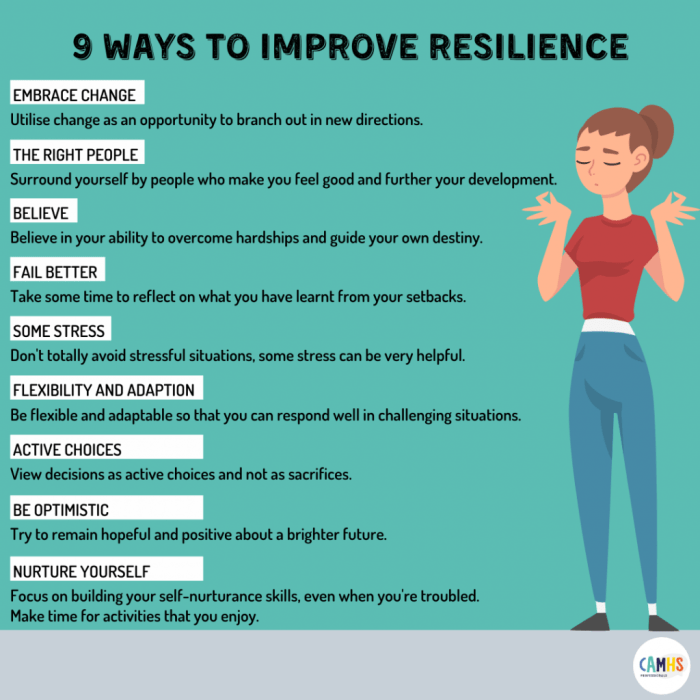
Positive psychology and cognitive behavioral therapy (CBT) are two powerful tools that can significantly enhance your mental resilience. These approaches focus on identifying and strengthening your positive traits, challenging negative thought patterns, and developing coping mechanisms to navigate life’s challenges.
Positive Psychology: Cultivating Strengths and Optimism
Positive psychology emphasizes the study of human flourishing and well-being. It focuses on identifying and nurturing your strengths, promoting positive emotions, and cultivating a sense of optimism. By understanding your unique strengths and applying them to your life, you can develop a greater sense of purpose, satisfaction, and resilience.
Cognitive Behavioral Therapy: Reframing Thoughts and Behaviors
Cognitive behavioral therapy (CBT) is a widely used therapeutic approach that focuses on the connection between thoughts, feelings, and behaviors. CBT helps you identify and challenge negative thought patterns that can contribute to stress, anxiety, and low resilience. It equips you with practical techniques to reframe negative thoughts, develop more adaptive behaviors, and build resilience in the face of adversity.
CBT Techniques for Enhancing Resilience
- Cognitive Restructuring:This technique involves identifying and challenging negative thought patterns. For example, if you’re feeling overwhelmed by a task, you might challenge the thought “I can’t handle this” by asking yourself, “What evidence supports this thought? Are there other ways to approach this task?”
- Behavioral Activation:This technique involves engaging in activities that bring you joy and a sense of accomplishment. By participating in activities you enjoy, you can boost your mood, increase your sense of self-efficacy, and build resilience. For example, if you’re feeling stressed, you could try engaging in a hobby you enjoy, spending time with loved ones, or going for a walk in nature.
- Mindfulness:Mindfulness practices, such as meditation and deep breathing exercises, can help you become more aware of your thoughts and feelings in the present moment without judgment. This increased awareness can help you identify and manage negative thoughts and emotions more effectively, leading to greater resilience.
Strengthening Resilience Through Social Connections and Support Networks
Humans are inherently social creatures, and our relationships play a crucial role in shaping our mental well-being and resilience. Strong social connections provide a buffer against stress, promote positive emotions, and offer a sense of belonging and purpose, ultimately contributing to our ability to bounce back from adversity.
The Importance of Social Connections for Mental Well-being and Resilience, How to measure and assess your mental resilience for personal growth
Social connections are essential for mental well-being and resilience. When we have strong social support, we experience a sense of belonging, love, and acceptance, which contributes to our overall happiness and well-being. This sense of belonging and support acts as a buffer against stress, helping us cope with challenges and maintain a positive outlook.
Studies have shown that individuals with strong social connections are less likely to experience depression, anxiety, and other mental health issues.
Strategies for Building and Maintaining Supportive Relationships
Building and maintaining supportive relationships requires effort and intentionality. Here are some strategies to foster strong social connections:
- Prioritize quality time with loved ones:Make time for meaningful interactions with friends and family, engaging in activities you both enjoy.
- Be a good listener and offer support:Show genuine interest in others, offer a listening ear, and be there for them when they need support.
- Practice empathy and understanding:Try to see things from others’ perspectives and appreciate their viewpoints, even if they differ from your own.
- Be reliable and trustworthy:Follow through on commitments and be someone others can depend on.
- Express gratitude and appreciation:Regularly acknowledge and appreciate the people in your life, expressing your gratitude for their presence and support.
- Join groups and activities that align with your interests:This provides opportunities to meet like-minded individuals and build new connections.
- Volunteer or engage in community activities:Contributing to something bigger than yourself can foster a sense of purpose and connect you with others who share your values.
Examples of How Social Support Can Help Navigate Challenges and Build Resilience
Social support can provide practical assistance, emotional comfort, and a sense of hope during challenging times.
- Practical assistance:Friends and family can help with tasks like childcare, errands, or transportation, easing the burden during stressful periods.
- Emotional comfort:Sharing your feelings with trusted individuals can help you process emotions, gain perspective, and feel less alone.
- Sense of hope:Social support can remind you that you are not alone and that others believe in you, fostering a sense of hope and optimism during difficult times.
Embracing Growth Mindset and Adaptability
A growth mindset, a concept pioneered by Stanford psychologist Carol Dweck, is crucial for building resilience. It’s the belief that our abilities and intelligence are not fixed but can be developed through effort and learning. This mindset enables us to embrace challenges, learn from setbacks, and adapt to changing circumstances, all key components of resilience.
The Importance of Embracing Challenges and Viewing Setbacks as Opportunities for Learning
Challenges are inevitable in life. They can be stressful and lead to feelings of frustration and inadequacy. However, a growth mindset encourages us to view challenges as opportunities for growth and learning. Instead of seeing setbacks as failures, we can reframe them as stepping stones towards success.
This shift in perspective allows us to learn from our mistakes, adjust our strategies, and ultimately become more resilient.
“Challenges are what make life interesting. Overcoming them is what makes life meaningful.”
Joshua Marine
Strategies for Developing a Growth Mindset and Fostering Adaptability
Developing a growth mindset is an ongoing process that requires conscious effort and practice. Here are some strategies:
- Focus on the process, not just the outcome:Instead of fixating on achieving a specific goal, concentrate on the effort and learning involved in the process. This shift in focus allows us to appreciate the journey and find value in every step, regardless of the outcome.
- Embrace mistakes as learning opportunities:When we make mistakes, we have the opportunity to learn from them and improve. Instead of dwelling on our failures, we can analyze what went wrong and develop strategies for avoiding similar mistakes in the future.
- Seek feedback and be open to constructive criticism:Feedback, even if it’s negative, can be valuable for identifying areas for improvement. By being open to constructive criticism, we can learn from our mistakes and grow as individuals.
- Celebrate small victories:Acknowledging and celebrating small victories along the way can help maintain motivation and build confidence. This positive reinforcement encourages us to keep pushing forward, even when faced with challenges.
- Surround yourself with positive and supportive people:The people we surround ourselves with have a significant impact on our mindset. By associating with individuals who embrace challenges and celebrate growth, we can create a positive and supportive environment that fosters resilience.
Maintaining Resilience Through Continuous Learning and Personal Development
Continuous learning and personal development are crucial for building and maintaining mental resilience. Engaging in these activities helps us grow as individuals, adapt to change, and navigate life’s challenges with greater confidence and flexibility.
Benefits of Pursuing New Hobbies, Skills, and Experiences
Pursuing new hobbies, skills, and experiences is a powerful way to enhance mental resilience. Engaging in these activities can help us:
- Expand our knowledge and perspectives:Learning new things challenges our minds and broadens our horizons, allowing us to see the world from different angles. This can help us develop a more nuanced and adaptable approach to life’s complexities.
- Boost our self-esteem and confidence:Mastering new skills and achieving personal goals provides a sense of accomplishment and boosts our self-esteem. This confidence can translate into other areas of our lives, making us more resilient in the face of setbacks.
- Develop our problem-solving abilities:Learning new things often involves tackling challenges and finding creative solutions. This process helps us develop our problem-solving skills, which are essential for navigating difficult situations and overcoming obstacles.
- Increase our adaptability and flexibility:Continuous learning encourages us to embrace change and adapt to new circumstances. This flexibility is crucial for navigating the ever-changing landscape of modern life and maintaining resilience in the face of unexpected challenges.
- Promote mental well-being:Engaging in activities we enjoy and find stimulating can reduce stress, improve our mood, and enhance our overall mental well-being. This positive impact on our mental state contributes to our resilience and ability to cope with difficult times.
Examples of Activities that Promote Personal Growth and Enhance Resilience
There are countless activities that can contribute to personal growth and enhance resilience. Here are a few examples:
- Taking a course or workshop:Learning a new skill or expanding your knowledge in a specific area can be a rewarding and enriching experience.
- Joining a club or group:Connecting with others who share your interests can provide support, encouragement, and opportunities for learning and growth.
- Reading books or articles:Exposing yourself to new ideas and perspectives can challenge your assumptions and broaden your understanding of the world.
- Traveling to new places:Experiencing different cultures and environments can foster adaptability, creativity, and a sense of wonder.
- Volunteering your time:Giving back to your community can provide a sense of purpose and connection, while also offering opportunities to develop new skills and gain valuable experiences.
- Learning a new language:Expanding your linguistic abilities can open up new opportunities for communication, travel, and cultural understanding.
- Taking up a new hobby:Engaging in activities that you find enjoyable and stimulating can reduce stress, boost your mood, and enhance your overall well-being.
End of Discussion
Building mental resilience is a continuous process that requires self-awareness, dedication, and a willingness to embrace challenges. By implementing the strategies Artikeld in this guide, you can equip yourself with the tools to navigate life’s inevitable ups and downs with greater strength and adaptability.
Remember, mental resilience is not a destination but a journey of growth and self-discovery. Embrace the process, celebrate your progress, and continue to invest in your well-being for a more fulfilling and resilient life.
Essential FAQs
What are some practical ways to incorporate mindfulness into my daily routine?
Start with short, focused moments of mindfulness throughout the day. Try practicing deep breathing exercises, paying attention to your senses during everyday activities, or engaging in mindful meditation for a few minutes each day.
How can I tell if I’m experiencing low mental resilience?
Signs of low mental resilience can include feeling overwhelmed easily, struggling to cope with stress, experiencing frequent mood swings, difficulty focusing, and withdrawing from social situations.
Is it possible to build resilience even if I’ve experienced trauma or adversity?
Yes, building resilience is possible even after experiencing trauma or adversity. It may take time and effort, but with support and appropriate strategies, you can learn to navigate challenges and develop greater strength and adaptability.


More Stories
Stress Management: Top Strategies for Emotional Wellbeing