Healthy Habits
Regular physical activity is crucial for seniors to maintain their overall health and well-being. Incorporating daily exercise into their routine can help improve mobility, flexibility, and strength, while also reducing the risk of chronic diseases such as heart disease, diabetes, and osteoporosis.
Simple Exercises for Seniors
- Walking: A low-impact exercise that can be done indoors or outdoors, walking helps improve cardiovascular health and strengthen leg muscles.
- Chair Yoga: Gentle yoga poses can be modified to be done while seated, promoting flexibility, balance, and relaxation.
- Strength Training: Using light weights or resistance bands, seniors can improve muscle mass and bone density, reducing the risk of falls and fractures.
Tips for Creating a Balanced Exercise Plan
- Consult with a healthcare provider: Before starting any exercise routine, seniors should consult with their doctor to ensure it is safe and appropriate for their individual needs.
- Mix it up: Incorporate a variety of exercises, including aerobic, strength training, and flexibility exercises, to target different areas of fitness.
- Set realistic goals: Start with manageable goals and gradually increase intensity and duration as fitness improves.
- Stay hydrated and nourished: Drink plenty of water before, during, and after exercise, and fuel the body with nutritious foods to support energy levels and recovery.
Emotional Wellbeing: Benefits Of An Active Lifestyle For Seniors
Regular physical activity plays a crucial role in enhancing the emotional wellbeing of seniors. Engaging in exercise and staying active can have a profound impact on their mental health and emotional state, leading to a better quality of life in their golden years.
Connection between Physical Activity and Mental Health
Physical activity has been linked to improved mental health in seniors. Exercise releases endorphins, also known as “feel-good” hormones, which can help reduce feelings of anxiety, stress, and depression. By staying active, seniors can experience a boost in mood and overall emotional well-being.
- Exercise as a Mood Booster: Regular physical activity can act as a natural mood enhancer, helping seniors feel more positive and resilient in dealing with life’s challenges.
- Reduced Risk of Depression: Studies have shown that seniors who engage in regular exercise are less likely to experience symptoms of depression and have a lower risk of developing mental health conditions.
- Improved Self-Esteem: Maintaining an active lifestyle can boost seniors’ confidence and self-esteem, leading to a more positive outlook on life.
Healthy Aging
Regular physical activity plays a crucial role in promoting healthy aging among seniors. By staying active, older adults can improve their overall health and well-being, leading to a higher quality of life as they age.
Exercise is particularly beneficial in preventing age-related health issues such as cardiovascular disease, osteoporosis, and diabetes. Physical activity helps to maintain muscle mass, bone density, and cardiovascular fitness, reducing the risk of chronic conditions that are common in older adults.
Success Stories
- One success story is that of Jane, a 70-year-old who started incorporating daily walks and light strength training into her routine. Over time, she noticed increased energy levels, improved mobility, and a reduced risk of falls.
- Another example is Tom, an 80-year-old who joined a senior yoga class and experienced improvements in flexibility, balance, and mental clarity. He credits his active lifestyle for helping him stay independent and engaged in life.
- Lastly, Sarah, a 75-year-old retired nurse, took up swimming as a form of exercise and saw significant improvements in her cardiovascular health and overall mood. She now enjoys a more active retirement with fewer health concerns.
Active Lifestyle
An active lifestyle for seniors encompasses more than just physical activity. It involves engaging in various components that contribute to overall well-being and quality of life.
Social Engagement
Social engagement is crucial for seniors to maintain connections, prevent isolation, and foster a sense of belonging. This can include joining clubs, volunteering, attending social events, or simply spending time with family and friends.
Cognitive Stimulation
Keeping the mind active is essential for cognitive health. Seniors can engage in activities like puzzles, reading, learning a new skill, or playing brain games to stimulate their brains and maintain mental sharpness.
Leisure Activities
Participating in leisure activities can bring joy and relaxation to seniors’ lives. This can involve hobbies such as gardening, painting, crafting, or even going for nature walks. Finding activities that bring pleasure and fulfillment is key to making an active lifestyle enjoyable and sustainable.
Cardiovascular Health
Regular exercise plays a crucial role in maintaining cardiovascular health for seniors. By engaging in aerobic activities such as walking, swimming, or cycling, seniors can significantly improve the functioning of their heart and reduce the risk of heart diseases.
Benefits of Aerobic Activities
- Improves heart function: Aerobic exercises help strengthen the heart muscle, allowing it to pump blood more efficiently throughout the body.
- Reduces blood pressure: Regular physical activity can help lower blood pressure levels, reducing the strain on the heart.
- Increases circulation: Aerobic activities promote better blood flow, delivering essential nutrients and oxygen to the body’s tissues.
- Enhances endurance: By engaging in aerobic exercises, seniors can improve their stamina and endurance, leading to a healthier heart and overall well-being.
Monitoring and Improving Heart Health
- Regular check-ups: Seniors should schedule regular visits with their healthcare provider to monitor their heart health and address any concerns.
- Tracking physical activity: Keeping a log of daily exercise routines can help seniors stay accountable and motivated to maintain an active lifestyle.
- Healthy diet: A balanced diet rich in fruits, vegetables, whole grains, and lean proteins can complement physical activity and support heart health.
- Stress management: Practicing relaxation techniques such as meditation or yoga can help reduce stress levels, benefiting heart health.
Healthy Recipes
Benefits of an active lifestyle for seniors – When it comes to maintaining an active lifestyle, having a balanced diet is essential for seniors. Nutritious recipes can provide the necessary fuel to support physical activity and overall health.
Nutrient-packed Breakfast Smoothie
Start your day with a nutrient-packed breakfast smoothie that is easy to make and delicious. Blend together fresh fruits like berries, bananas, and spinach with some Greek yogurt and a splash of almond milk for a refreshing and energizing morning boost.
Grilled Salmon with Quinoa and Roasted Vegetables
For a wholesome and satisfying dinner option, try grilling salmon seasoned with herbs and lemon juice. Serve it with a side of fluffy quinoa and a colorful array of roasted vegetables like bell peppers, zucchini, and cherry tomatoes for a nutrient-rich meal that supports healthy aging.
Vegetable Stir-Fry with Brown Rice
A quick and easy lunch idea is a vegetable stir-fry with brown rice. Saute your favorite vegetables like broccoli, carrots, and snap peas in a light soy sauce and ginger sauce. Serve it over a bed of fluffy brown rice for a fiber-packed and flavorful meal that keeps you energized throughout the day.
Mental Resilience
Regular physical activity is not only beneficial for the body but also plays a crucial role in enhancing cognitive function and mental resilience in seniors. Exercise has been shown to have a positive impact on memory, focus, and overall mental acuity, helping seniors maintain sharp cognitive abilities as they age.
Brain-Stimulating Activities
Engaging in brain-stimulating activities can further complement the benefits of physical exercise for seniors. These activities help to keep the mind active and challenged, promoting mental resilience and cognitive health. Some recommendations include:
- Reading and solving puzzles: Reading books, solving crosswords, Sudoku, or playing brain games can help keep the mind sharp and improve cognitive function.
- Learning new skills: Taking up a new hobby or learning a new skill, such as painting, playing a musical instrument, or learning a new language, can help stimulate the brain and enhance cognitive abilities.
- Socializing: Interacting with others through social activities, joining clubs or groups, or volunteering can provide mental stimulation and emotional support, contributing to overall mental resilience.
- Mindfulness and meditation: Practicing mindfulness techniques or meditation can help reduce stress, improve focus, and enhance mental clarity, promoting cognitive function and emotional wellbeing.
- Physical activities that require coordination: Activities like dancing, yoga, or tai chi not only benefit physical health but also challenge the mind by requiring coordination and focus, promoting mental resilience.
Immune Support
Regular physical activity plays a crucial role in boosting the immune system of seniors. Exercise has been shown to have a positive impact on immune function, leading to overall better health and reduced risk of illness.
Benefits of Exercise for Immune Function
Regular exercise helps to improve circulation, allowing immune cells to move more freely throughout the body. This enhanced circulation enables the immune system to detect and fight off infections more effectively. Additionally, physical activity can reduce inflammation in the body, which is linked to various chronic conditions and weakened immunity.
Tips for Maintaining a Strong Immune System
- Engage in regular cardiovascular exercise such as walking, swimming, or cycling to support immune function.
- Incorporate strength training exercises to build muscle mass and improve overall health.
- Ensure adequate rest and recovery between workout sessions to prevent overtraining, which can suppress the immune system.
- Follow a balanced diet rich in fruits, vegetables, lean proteins, and whole grains to provide essential nutrients for immune support.
- Stay hydrated throughout the day to help flush out toxins and support immune function.
Stress Relief
Engaging in physical activity can be a powerful tool for seniors to manage stress and anxiety. Exercise has been shown to release endorphins, which are chemicals in the brain that act as natural painkillers and mood elevators. These endorphins help reduce stress levels and improve overall mental wellbeing.
Incorporating Mindfulness Practices, Benefits of an active lifestyle for seniors
- Practice deep breathing exercises during your workout routine to promote relaxation and reduce stress.
- Engage in yoga or tai chi, which combines physical movement with mindfulness techniques to help calm the mind.
- Take nature walks or practice meditation outdoors to connect with the environment and promote a sense of peace.
Nutritional Balance
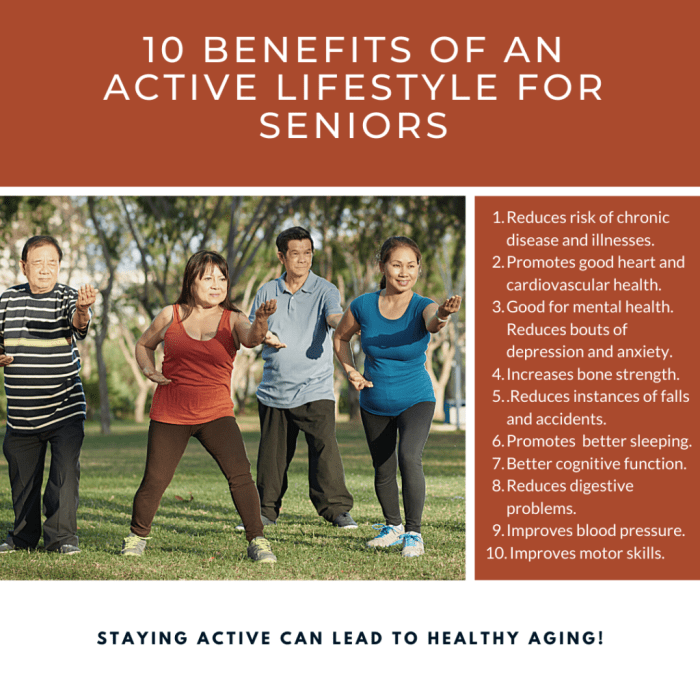
Maintaining a well-balanced diet is crucial for seniors who lead an active lifestyle. Proper nutrition not only supports their fitness goals but also contributes to overall health and wellbeing.
Key Nutrients for Seniors
- Protein: Essential for muscle maintenance and repair. Sources include lean meats, poultry, fish, eggs, dairy, legumes, and nuts.
- Calcium and Vitamin D: Important for bone health and strength. Dairy products, leafy greens, and fortified foods are good sources.
- Omega-3 Fatty Acids: Support heart health and cognitive function. Fatty fish, flaxseeds, and walnuts are rich sources.
- Fiber: Aids in digestion and helps maintain a healthy weight. Whole grains, fruits, vegetables, and legumes are excellent sources.
- Vitamin B12: Necessary for nerve function and red blood cell production. Found in animal products and fortified foods.
- Antioxidants (Vitamins C and E): Help protect cells from damage and support the immune system. Berries, citrus fruits, nuts, and seeds are good sources.
Nutrient-Dense Foods for Seniors
- Salmon: Rich in omega-3 fatty acids and high-quality protein.
- Greek Yogurt: Excellent source of calcium and probiotics for gut health.
- Quinoa: Provides fiber, protein, and essential minerals like magnesium and iron.
- Dark Leafy Greens: Packed with vitamins, minerals, and antioxidants.
- Nuts and Seeds: Healthy fats, fiber, and various nutrients for energy and vitality.
FAQ Corner
How can regular physical activity benefit seniors emotionally?
Regular physical activity can release endorphins, also known as “feel-good” hormones, which can reduce stress, anxiety, and improve mood in seniors.
What role does social engagement play in an active lifestyle for seniors?
Social engagement is crucial for seniors as it helps combat loneliness, boosts mental health, and provides a sense of community and belonging, enhancing overall well-being.
Why is cardiovascular health important for seniors?
Cardiovascular health is vital for seniors as it reduces the risk of heart-related diseases, improves circulation, and enhances overall endurance and stamina.


More Stories