Healthy Habits
Active lifestyle tips for new parents – As new parents, incorporating healthy habits into your daily routine is crucial not only for your own well-being but also for setting a positive example for your children. Consistency is key, even with a busy schedule, to ensure a healthy lifestyle for the whole family.
Essential Healthy Habits for New Parents
- Make time for regular physical activity, whether it’s a quick workout at home or a family walk in the evenings.
- Prioritize nutritious meals by planning and preparing healthy options ahead of time to avoid relying on fast food.
- Prioritize sleep and rest to recharge your body and mind, even if it means asking for help with childcare responsibilities.
Setting a Good Example
- Children learn by observing, so make sure to demonstrate healthy habits like eating fruits and vegetables, staying active, and managing stress effectively.
- Involve your children in meal planning and preparation to instill a love for cooking and healthy eating early on.
Consistency Amidst a Busy Schedule
- Set realistic goals and create a schedule that allows for flexibility in case unexpected events arise.
- Utilize short bursts of exercise throughout the day, such as doing jumping jacks during TV commercial breaks or taking the stairs instead of the elevator.
- Practice mindfulness and stress-relief techniques to maintain mental well-being, even during hectic days.
Emotional Wellbeing
Emotional wellbeing plays a crucial role in the overall health and happiness of new parents. It not only affects their personal mental health but also has a significant impact on their ability to care for their child.
Strategies for Managing Stress and Promoting Emotional Balance
Managing stress and promoting emotional balance is essential for new parents to navigate the challenges of parenthood effectively. Here are some strategies to help:
- Practice self-care: Make time for activities that bring you joy and relaxation, whether it’s reading a book, going for a walk, or taking a long bath.
- Communicate openly: Share your feelings with your partner, friends, or a therapist to release pent-up emotions and gain support.
- Seek help when needed: Don’t hesitate to ask for assistance from family members, friends, or professionals to lighten your load and reduce stress.
- Stay organized: Creating a routine and prioritizing tasks can help you feel more in control and reduce feelings of overwhelm.
Impact of Parental Emotional Wellbeing on Children
Parental emotional wellbeing has a direct impact on children’s development and overall well-being. When parents are emotionally balanced and content, they can provide a nurturing and supportive environment for their children to thrive. On the other hand, when parents are stressed or overwhelmed, it can lead to increased behavioral issues and emotional challenges for their children.
Healthy Aging
Maintaining an active lifestyle as a new parent can significantly contribute to healthy aging in the long run. By engaging in regular physical activity, new parents can improve their overall health, boost their immune system, and increase their longevity. These habits established early on can have lasting benefits as individuals age.
Incorporating Anti-Aging Practices
It’s essential to incorporate anti-aging practices into daily routines to promote healthy aging. Here are some tips on how to do so:
- Stay hydrated by drinking an adequate amount of water daily.
- Eat a balanced diet rich in fruits, vegetables, whole grains, and lean proteins.
- Get enough sleep to allow your body to rest and rejuvenate.
- Protect your skin from the sun by using sunscreen and wearing protective clothing.
- Engage in regular exercise to maintain muscle strength and flexibility.
Benefits of Early Healthy Aging Habits
Starting healthy aging habits early in life can have numerous benefits for individuals as they grow older. Some advantages include:
- Reduced risk of chronic diseases such as heart disease, diabetes, and hypertension.
- Improved cognitive function and reduced risk of cognitive decline.
- Enhanced physical strength and mobility, promoting independence in later years.
- Increased overall quality of life and well-being.
Active Lifestyle
Maintaining an active lifestyle is crucial for new parents to stay healthy and energized while taking care of their little ones. Incorporating physical activity into their routine can have numerous benefits for both their physical and mental wellbeing.
Simple Exercises for New Parents, Active lifestyle tips for new parents
- Brisk walking: Take your baby out for a stroll in the park or around the neighborhood. It’s a great way to get some fresh air and exercise.
- Bodyweight exercises: Try simple bodyweight exercises like squats, lunges, push-ups, and planks that can be done at home while your baby is napping.
- Dance parties: Put on some music and have a dance party with your little one. It’s a fun way to get moving and bond with your baby.
Importance of Staying Active
Regular physical activity can help new parents maintain a healthy weight, reduce stress, boost energy levels, and improve sleep quality. It also sets a positive example for their children, emphasizing the importance of an active lifestyle from a young age.
Tips for Incorporating Physical Activity
Find small pockets of time throughout the day to squeeze in quick workouts, such as during your baby’s nap time or while they are playing independently.
- Join a parent-and-baby exercise class: Look for classes specifically designed for new parents that allow you to work out while bonding with your little one.
- Make it a family affair: Involve your partner and children in physical activities like bike rides, hikes, or family walks to make staying active a shared experience.
- Multitask: Incorporate exercise into your daily routine by doing squats while playing with your baby or taking the stairs instead of the elevator.
Cardiovascular Health
Regular physical activity is crucial for maintaining good cardiovascular health, especially for new parents who may have added stress and responsibilities. An active lifestyle can help improve heart health, reduce the risk of heart disease, and increase overall well-being.
Cardiovascular Exercises for New Parents
- Brisk walking: A simple yet effective way to get your heart pumping without the need for any special equipment. Aim for at least 30 minutes a day.
- Swimming: A low-impact exercise that works out multiple muscle groups and is gentle on the joints. Great for cardiovascular health.
- Cycling: Whether outdoors or on a stationary bike, cycling is a great way to improve cardiovascular fitness and strengthen leg muscles.
Importance of Regular Check-ups
Regular check-ups with your healthcare provider are essential for monitoring your cardiovascular health. They can help detect any potential issues early on and provide guidance on maintaining a healthy heart. Remember, prevention is key when it comes to heart health.
Healthy Recipes
Preparing easy and nutritious recipes is essential for new parents looking to maintain a healthy lifestyle for themselves and their families. A balanced diet is key to overall health and wellbeing, providing the necessary nutrients for optimal functioning. Meal planning and preparation can help new parents stay on track with their health goals and ensure they are fueling their bodies with the right foods.
Quick and Healthy Breakfast Ideas
- Prepare overnight oats with fruits and nuts for a wholesome and filling breakfast.
- Create a smoothie bowl with Greek yogurt, berries, and granola for a refreshing start to the day.
- Scramble eggs with spinach, tomatoes, and avocado for a protein-packed breakfast option.
Nutritious Lunch and Dinner Options
- Bake salmon with lemon and herbs, paired with quinoa and roasted vegetables for a nutritious dinner.
- Make a veggie stir-fry with tofu and brown rice for a flavorful and satisfying lunch.
- Prepare a lentil soup with carrots, celery, and kale for a hearty and nourishing meal.
Snack Ideas for Energy Boost
- Snack on a handful of mixed nuts and dried fruits for a quick energy boost between meals.
- Slice up fresh vegetables like cucumbers, bell peppers, and carrots, and dip them in hummus for a healthy snack option.
- Popcorn seasoned with nutritional yeast and spices makes for a tasty and guilt-free snack.
Mental Resilience
Mental resilience is the ability to adapt and bounce back from difficult situations, challenges, or stress. It involves coping with adversity, maintaining a positive outlook, and finding ways to stay strong in the face of obstacles. For new parents, mental resilience is crucial as they navigate the demands of raising a child while juggling other responsibilities.
Strategies for Developing Mental Resilience
Building mental resilience as a new parent can help you manage stress, stay focused, and maintain a sense of balance. Here are some strategies to develop mental resilience:
- Practice self-care: Prioritize your well-being by getting enough rest, eating healthily, and engaging in activities you enjoy.
- Seek support: Lean on friends, family, or support groups for guidance and encouragement during challenging times.
- Practice mindfulness: Stay present in the moment, practice deep breathing, and engage in relaxation techniques to reduce stress.
- Set realistic goals: Break tasks into manageable steps, set achievable goals, and celebrate small victories along the way.
- Learn from setbacks: View setbacks as learning opportunities, reflect on what went wrong, and adjust your approach for future success.
Impact of Mental Resilience on Overall Wellbeing
Mental resilience not only helps new parents cope with the demands of parenting but also has a positive impact on their overall wellbeing. By developing mental resilience, parents can improve their mental health, enhance their relationships, and feel more equipped to handle the ups and downs of parenthood.
Immune Support: Active Lifestyle Tips For New Parents
New parents often face challenges when it comes to maintaining a strong immune system while juggling the demands of parenthood. A healthy immune system is crucial for both parents and their children as it helps protect against illnesses and ensures overall well-being. Here are some tips on how new parents can boost their immune system through lifestyle choices and natural remedies:
Healthy Diet
Eating a balanced diet rich in fruits, vegetables, whole grains, and lean proteins is essential for supporting the immune system. Foods high in vitamins C and D, zinc, and antioxidants can help strengthen the body’s defense mechanisms.
Regular Exercise
Engaging in regular physical activity not only improves overall health but also boosts the immune system. Aim for at least 30 minutes of moderate exercise most days of the week to help reduce the risk of infections and keep the immune system strong.
Adequate Sleep
Quality sleep is crucial for immune function. Lack of sleep can weaken the immune system, making the body more susceptible to illnesses. New parents should prioritize getting enough rest to support their immune health.
Stress Management
Chronic stress can suppress the immune system, making individuals more vulnerable to infections. Practicing stress-reducing activities such as meditation, yoga, or deep breathing exercises can help support immune function.
Natural Remedies
Incorporating natural remedies like herbal teas, immune-boosting supplements, and essential oils can provide additional support for the immune system. Consult with a healthcare provider before trying any new remedies, especially if pregnant or breastfeeding.
Stress Relief
As new parents, navigating the responsibilities of parenthood can often lead to high levels of stress. It is important to find effective ways to manage and alleviate stress to ensure your overall health and wellbeing.
Impact of Chronic Stress
Chronic stress can have a significant impact on both physical and mental health. It can lead to increased blood pressure, weakened immune system, digestive issues, and even contribute to the development of chronic diseases such as heart disease and diabetes. Moreover, chronic stress can also affect your mood, sleep patterns, and overall quality of life.
- Practice relaxation techniques such as deep breathing, meditation, or yoga to help reduce stress levels.
- Engage in regular physical activity as exercise can help release endorphins, the body’s natural stress relievers.
- Ensure you are getting an adequate amount of sleep each night to support your body’s ability to cope with stress.
- Seek support from friends, family, or a therapist to talk about your feelings and concerns.
- Set boundaries and prioritize self-care to prevent burnout and overwhelm.
- Consider incorporating mindfulness practices into your daily routine to stay present and reduce stress.
Creating a Stress-Free Environment at Home
Creating a calm and peaceful environment at home can significantly impact your stress levels and overall wellbeing.
- Declutter and organize your living space to promote a sense of calm and order.
- Establish a daily routine to provide structure and predictability for you and your family.
- Communicate openly with your partner or co-parent to share responsibilities and avoid unnecessary conflicts.
- Designate a relaxation space at home where you can unwind and destress after a long day.
- Practice gratitude by reflecting on the positive aspects of your life and expressing appreciation for your loved ones.
- Avoid overcommitting yourself and learn to say no when necessary to protect your time and energy.
Nutritional Balance
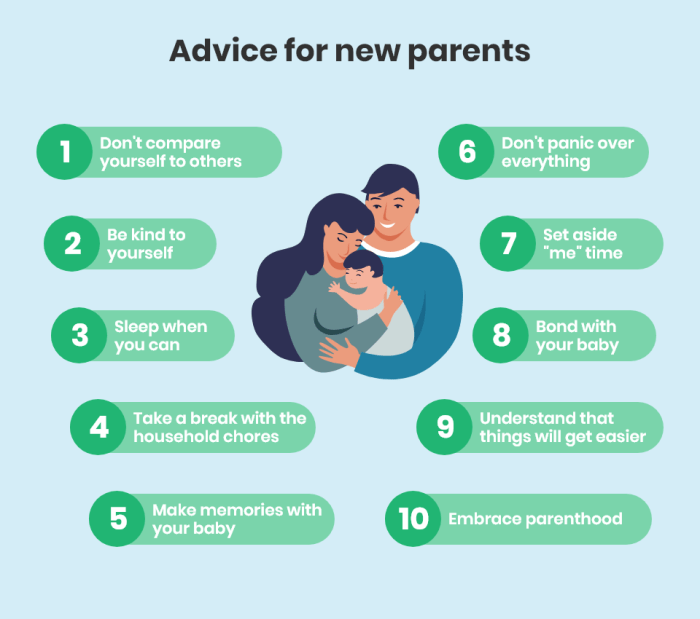
Maintaining a balanced diet is crucial for new parents as it provides the necessary nutrients for both parents and their child. A balanced diet helps in boosting energy levels, enhancing mood, and supporting overall health and well-being. It also sets a good example for children, encouraging healthy eating habits from a young age.
Tips for Achieving Nutritional Balance
- Plan and prepare meals in advance to ensure nutritious options are readily available.
- Incorporate a variety of fruits, vegetables, whole grains, lean proteins, and healthy fats into your daily meals.
- Avoid skipping meals and opt for smaller, more frequent meals to maintain energy levels throughout the day.
- Stay hydrated by drinking plenty of water and limit the consumption of sugary beverages.
- Read food labels and be mindful of portion sizes to prevent overeating and ensure a balanced intake of nutrients.
Long-Term Benefits of Prioritizing Nutritional Balance
Maintaining nutritional balance not only supports immediate health but also offers long-term benefits. By prioritizing a balanced diet, new parents can reduce the risk of chronic diseases, such as heart disease, diabetes, and obesity. It also helps in maintaining a healthy weight, improving overall quality of life, and promoting longevity. Additionally, a balanced diet can enhance cognitive function, boost immunity, and support healthy aging, ensuring a better future for both parents and their children.
FAQ Summary
How can new parents maintain a healthy lifestyle despite a busy schedule?
By incorporating small but consistent healthy habits into their daily routine and finding ways to stay active even with limited time.
What are some effective stress relief techniques for new parents?
New parents can try mindfulness practices, deep breathing exercises, or engaging in hobbies they enjoy to alleviate stress.
Why is emotional well-being important for new parents?
Emotional well-being is crucial for new parents as it affects their ability to cope with challenges and provide a nurturing environment for their children.


More Stories