Healthy Habits for Improving Posture
Maintaining good posture is crucial for overall health and well-being. It helps prevent muscle strain, back pain, and even improves digestion and circulation. Here are some tips and exercises to help you improve and maintain proper posture.
Tips for Maintaining Proper Posture
- Sit up straight with your shoulders back and relaxed. Avoid slouching.
- Ensure your feet are flat on the ground when sitting, with your knees at a 90-degree angle.
- Adjust your computer screen to eye level to avoid straining your neck.
- Take breaks to stretch and walk around if you sit for long periods.
Exercises to Strengthen Posture Muscles
- Plank: Hold a plank position for 30 seconds to 1 minute to strengthen your core muscles.
- Bridge: Lie on your back with knees bent, lift your hips off the ground to engage your glutes and lower back.
- Shoulder Blade Squeeze: Sit or stand with your arms by your sides, squeeze your shoulder blades together for 5-10 seconds.
- Cat-Cow Stretch: Get on all fours, arch your back up like a cat, then lower your belly towards the floor like a cow.
Emotional Wellbeing
Posture is not only important for physical health but also plays a significant role in our emotional wellbeing. Our body language and posture can affect our mood, confidence, and overall mental health. Poor posture can lead to feelings of sadness, stress, and low self-esteem.
Mindfulness Practices for Improved Posture and Mental Health
- Practice mindful breathing exercises to help relax your body and mind, allowing you to be more aware of your posture throughout the day.
- Engage in yoga or tai chi, which focus on body awareness and proper alignment, promoting better posture and reducing stress.
- Take short breaks throughout the day to check in with your body, release tension, and adjust your posture as needed.
Reducing Stress and Anxiety for Better Posture
- Incorporate stress-relief techniques such as meditation, deep breathing exercises, or progressive muscle relaxation into your daily routine to reduce tension in your body and improve posture.
- Establish a consistent sleep schedule to ensure you are well-rested, as lack of sleep can contribute to poor posture and increased stress levels.
- Engage in activities that bring you joy and relaxation, such as spending time in nature, listening to music, or practicing hobbies, to reduce anxiety and promote better posture.
Healthy Aging
Maintaining good posture is crucial for healthy aging as it directly influences the aging process. Poor posture can lead to muscle imbalances, joint stiffness, and decreased flexibility, making daily activities more challenging as we age.
Tips for Seniors to Maintain Good Posture
- Stay active: Regular exercise, including activities that improve strength and flexibility, can help seniors maintain good posture.
- Practice proper ergonomics: Ensure that workspaces and living areas are set up to promote good posture, with supportive chairs and proper lighting.
- Stay mindful of posture: Make a conscious effort to sit and stand up straight, avoiding slouching and hunching over.
- Stretch regularly: Incorporate stretching exercises into your daily routine to improve flexibility and prevent stiffness.
- Visit a physical therapist: A physical therapist can provide personalized exercises and guidance to improve posture and address any musculoskeletal issues.
Benefits of Good Posture in Preventing Age-Related Issues
- Prevents back pain: Good posture helps distribute weight evenly, reducing strain on the spine and muscles.
- Improves balance and coordination: Proper alignment reduces the risk of falls and injuries, common concerns for seniors.
- Enhances breathing and circulation: Good posture allows for optimal lung expansion and blood flow, supporting overall health and vitality.
- Boosts confidence and mood: Standing tall with good posture can promote a positive self-image and outlook on life.
Active Lifestyle
Maintaining good posture is essential for individuals with an active lifestyle, as it directly impacts performance in physical activities and helps prevent injuries during exercise.
Exercises and Stretches
- Shoulder Blade Squeeze: Stand with your back against a wall and squeeze your shoulder blades together, holding for 5 seconds. Repeat 10 times.
- Chest Opener Stretch: Clasp your hands behind your back and straighten your arms while lifting them slightly. Hold for 15-30 seconds.
- Child’s Pose: Kneel on the floor, then sit back on your heels while reaching your arms forward. Hold for 30 seconds to stretch the spine.
Importance of Good Posture for Athletes
Proper alignment and posture can improve breathing, circulation, and overall performance during physical activities.
- Enhanced Balance: Good posture helps athletes maintain stability and balance, reducing the risk of falls or injuries.
- Improved Muscle Function: Correct posture ensures that muscles are engaged properly, leading to more efficient movement and decreased strain.
- Reduced Risk of Overuse Injuries: Maintaining good posture can help distribute weight evenly, preventing excessive strain on specific muscles or joints.
Cardiovascular Health: Healthy Habits For Improving Posture
Maintaining good posture can have a significant impact on cardiovascular health. Proper posture helps to reduce strain on the cardiovascular system, allowing for better blood circulation throughout the body.
How Posture Affects Blood Circulation
Improper posture, such as slouching or hunching over, can compress blood vessels and restrict blood flow. This can lead to decreased oxygen and nutrient delivery to vital organs, putting a strain on the heart and increasing the risk of cardiovascular issues.
- Ensure your shoulders are aligned with your hips to promote proper blood flow.
- Avoid crossing your legs while sitting to prevent interference with circulation.
- Practice proper spinal alignment to reduce pressure on blood vessels and improve circulation.
Healthy Recipes
Healthy habits for improving posture – When it comes to maintaining good posture, nutrition plays a crucial role in supporting bone and muscle health. Eating a balanced diet rich in nutrients can help reduce inflammation and promote overall good posture.
Recipe 1: Salmon Quinoa Bowl
This delicious recipe is packed with omega-3 fatty acids from salmon, which can help reduce inflammation and support joint health. Quinoa is a great source of protein and fiber, providing essential nutrients for muscle health.
- Grilled salmon fillet
- Cooked quinoa
- Steamed broccoli
- Sliced avocado
- Lemon vinaigrette dressing
Recipe 2: Spinach and Chickpea Salad, Healthy habits for improving posture
This vibrant salad is rich in iron from spinach, which is essential for muscle function and overall health. Chickpeas provide a good source of protein and fiber, supporting muscle strength and reducing inflammation.
- Fresh spinach leaves
- Canned chickpeas
- Sliced red bell pepper
- Diced cucumber
- Tahini dressing
Recipe 3: Turmeric Ginger Carrot Soup
This comforting soup is loaded with anti-inflammatory ingredients like turmeric and ginger, which can help reduce pain and inflammation in the body. Carrots are rich in vitamin A, supporting bone health and overall posture.
- Fresh carrots
- Fresh ginger
- Ground turmeric
- Vegetable broth
- Coconut milk
Mental Resilience
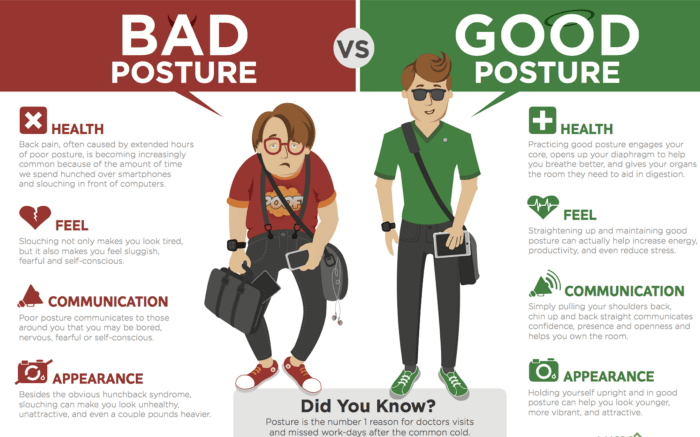
Having good posture goes beyond physical health; it also plays a crucial role in mental resilience. Posture influences confidence, self-esteem, and overall mindset. When you maintain proper posture, you not only look more confident but also feel more positive and resilient in facing life’s challenges.
Techniques to Improve Posture for Mental Resilience
- Practice mindfulness: Become aware of your posture throughout the day and make conscious efforts to correct it.
- Strengthen core muscles: Engage in exercises that target your core muscles to support a straighter spine and better posture.
- Use ergonomic furniture: Invest in ergonomic chairs and desks to promote good posture while working or studying.
- Take breaks: Avoid prolonged periods of sitting or standing by taking regular breaks to stretch and readjust your posture.
Psychological Benefits of Good Posture
Maintaining good posture not only leads to physical health benefits but also has a positive impact on your psychological well-being. Some psychological benefits of good posture include:
- Increased confidence and self-esteem: Good posture projects confidence, which can boost self-esteem and improve your overall outlook on life.
- Enhanced mood and mental resilience: By maintaining good posture, you can reduce feelings of stress and anxiety, leading to a more resilient mindset.
- Improved focus and cognitive function: Proper alignment of the spine through good posture can enhance cognitive function and help you stay focused on tasks.
Immune Support
Maintaining good posture can have a positive impact on our immune system. When we have proper alignment, our body is better able to function optimally, including the immune system. Here are some tips on how good posture can positively impact immune function:
Benefits of Good Posture for Immune Health
- Improved breathing: Good posture allows for better lung expansion, increasing oxygen intake which is crucial for immune function.
- Enhanced circulation: Proper posture helps blood flow efficiently, aiding in the distribution of immune cells throughout the body.
- Reduced stress on internal organs: Good posture prevents compression of organs, allowing them to function properly and support immune responses.
- Optimized lymphatic drainage: Proper alignment helps lymph fluid circulate effectively, aiding in the removal of toxins and waste from the body.
Lifestyle Habits for Supporting Posture and Immune Health
- Regular exercise: Engaging in activities that promote strength and flexibility can help maintain good posture and strengthen the immune system.
- Healthy diet: Eating a balanced diet rich in nutrients supports both posture and immune function, providing the body with essential vitamins and minerals.
- Stress management: Practicing relaxation techniques like meditation or yoga can reduce tension in the body, supporting both posture and immune health.
- Adequate sleep: Getting enough rest allows the body to repair and regenerate, benefiting posture and immune system function.
Stress Relief
Stress can have a significant impact on our posture, often leading to slouching or hunching over, which can further exacerbate feelings of stress and tension in the body. In this section, we will explore how posture and stress are interconnected and provide strategies for managing stress to improve overall posture.
How Posture Affects Stress Levels
Maintaining good posture can actually help reduce stress levels by promoting proper alignment of the spine and allowing for optimal breathing. When we sit or stand with good posture, our body is better able to cope with the physical effects of stress, such as muscle tension and fatigue. Additionally, proper posture can help boost confidence and improve mood, leading to a more positive outlook when faced with stressful situations.
Relaxation Techniques for Good Posture and Stress Reduction
- Practice deep breathing exercises to calm the mind and relax tense muscles.
- Try progressive muscle relaxation to release tension in different parts of the body.
- Incorporate yoga or Pilates into your routine to improve flexibility, strength, and posture.
- Use mindfulness meditation to increase awareness of your body and reduce stress levels.
Strategies for Managing Stress to Improve Posture
- Identify stress triggers and work on finding healthy ways to cope with them.
- Engage in regular physical activity to release endorphins and alleviate stress.
- Practice time management and prioritize tasks to reduce feelings of overwhelm.
- Seek support from friends, family, or a mental health professional when needed.
Nutritional Balance
Maintaining a balanced and nutritious diet plays a crucial role in supporting musculoskeletal health, which is essential for good posture. Proper nutrition provides the necessary nutrients to keep bones and muscles strong, allowing the body to maintain proper alignment and support.
Dietary Tips for Strong Bones and Muscles
- Aim to include a variety of foods rich in calcium, such as dairy products, leafy greens, and fortified foods, to support bone health.
- Ensure an adequate intake of vitamin D through sources like fatty fish, egg yolks, and fortified foods, as it aids in calcium absorption for bone strength.
- Incorporate lean proteins like poultry, fish, beans, and nuts to support muscle health and repair.
- Include magnesium-rich foods like nuts, seeds, whole grains, and leafy greens to help maintain muscle function and bone density.
Importance of Hydration for Flexibility and Posture
Hydration is key in promoting flexibility and maintaining good posture as it helps lubricate joints, improve muscle function, and support overall body movement.
Remember to drink an adequate amount of water throughout the day to stay hydrated and support musculoskeletal health.
FAQ Overview
How does posture impact emotional well-being?
Good posture can contribute to a positive emotional state by boosting confidence and reducing feelings of stress and anxiety.
Can posture affect cardiovascular health?
Yes, posture plays a role in cardiovascular health by influencing blood circulation and reducing strain on the heart and cardiovascular system.
Are there specific exercises to improve posture for seniors?
Seniors can benefit from exercises that focus on core strength, flexibility, and balance to maintain good posture as they age.


More Stories
Nutritional balance and mental health: A vital connection for overall well-being
Stress relief breathing exercises: Breathe your way to calmness and well-being
Immune support for people with chronic illness: Enhancing health through holistic strategies